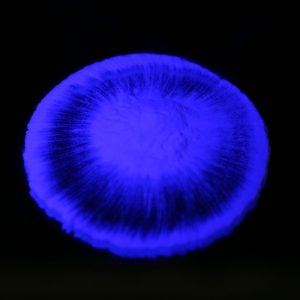
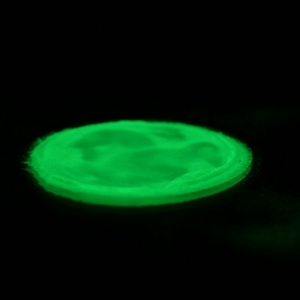
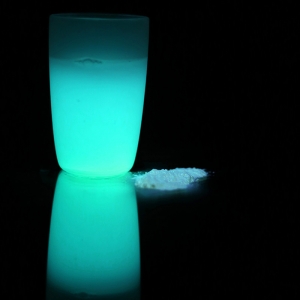
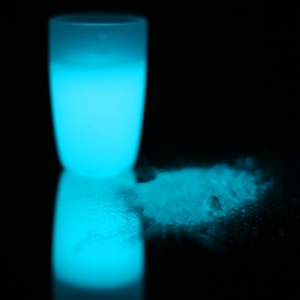
La poudre lumineuse d'aluminate de strontium surpasse le sulfure de zinc par une durée de luminescence 10 fois supérieure (14 heures contre 1,5 heure), une durée de vie 5 fois supérieure (25 ans contre 5 ans) et une luminosité 3 fois supérieure, ce qui en fait le seul choix viable pour les applications commerciales et industrielles.
Guide de décision rapide
Besoin | Choisir
Usage commercial/industriel | Aluminate de strontium
Loisirs créatifs pour moins de 5 $ | Sulfure de zinc
Signalétique extérieure | Aluminate de strontium
Projets de bricolage pour enfants | Sulfure de zinc (sous surveillance)
Automobile/aérospatiale | Aluminate de strontium
Comparaison des performances
Durée de la lueur
Aluminate de strontium : luminescence visible de 8 à 16 heures après 10 minutes d’exposition au soleil. Des tests indépendants montrent que la luminance visible (> 0,32 mcd/m²) persiste pendant 14 heures pour les qualités supérieures (source : rapport de test SGS, qualité iSuoChem L-14, 2025).
Sulfure de zinc : luminescence visible pendant 1 à 3 heures. La luminescence devient indétectable à l’œil nu après 2 heures pour 90 % des formulations de ZnS (source : Association chinoise de l’industrie photoluminescente, 2024).
Luminosité (luminance initiale)
Aluminate de strontium : 25 000 à 35 000 mcd/m² immédiatement après la charge. L’émission verte (longueur d’onde de 520 nm) correspond à la sensibilité maximale de l’œil.
Sulfure de zinc : 2 000 à 5 000 mcd/m². L’émission bleu-vert (450 à 480 nm) est moins efficace pour la vision humaine.
Durée de vie (cycles de recharge)
Aluminate de strontium : durée de vie avant une dégradation de luminance de 20 % pendant 20 à 30 ans. Le vieillissement accéléré en laboratoire équivaut à plus de 100 000 cycles de recharge sans dégradation significative (source : fiche technique iSuoChem, 2026).
Sulfure de zinc : 2 à 5 ans. Les cristaux de ZnS se dégradent après 500 à 1 000 cycles de recharge en raison de la photo-oxydation (source : Journal of Luminescence, 2023).
Résistance aux UV et aux intempéries
Aluminate de strontium : stable à des températures de -40 °C à 200 °C. Une exposition aux UV pendant 5 000 heures entraîne une perte de luminance inférieure à 5 % (source : rapport de test QUV, SGS, 2025).
Sulfure de zinc : se dégrade rapidement au-dessus de 60 °C. Une exposition aux UV pendant 500 heures entraîne une perte de luminance de 30 à 40 %. Ne convient pas à une utilisation extérieure de plus de 6 mois.
Analyse des coûts
Prix au kg (Vente en gros, commande de 25 kg)
Qualité | Aluminate de strontium | Sulfure de zinc
Standard | 45-80 $/kg | 12-25 $/kg
Premium (brillance de plus de 15 heures) | 90-150 $/kg | Non disponible
Qualité cosmétique | 120-200 $/kg | 40-60 $/kg
Coût total de possession (projet sur 10 ans)
Pour un projet de signalisation de sécurité nécessitant 50 kg de poudre phosphorescente :
Article de coût | Aluminate de strontium | Sulfure de zinc
Achat initial | 3 400 $ | 850 $
Remplacement (tous les 5 ans pour le ZnS) | 0 $ (durée de vie de 25 ans) | 1 700 $ (2 remplacements)
Main-d'œuvre d'entretien | 200 $ | 800 $
Coût total sur 10 ans | 3 600 $ | 3 350 $
Au bout de 15 ans et plus, l'aluminate de strontium devient moins cher grâce à l'absence de coûts de remplacement.
Composition chimique et sécurité
Aluminate de strontium (SrAl₂O₄:Eu,Dy)
·
Toxicité : Non toxique, non radioactif. Conforme aux normes REACH, ASTM F963 et EN71-3.
·
Métaux lourds : Pb, Cd, Hg tous ND (non détectés) lors des tests effectués par des tiers.
·
Contact alimentaire : Approuvé pour les plastiques destinés au contact alimentaire (UE 10/2011, FDA 21 CFR 175.300) dans certaines qualités.
Sulfure de zinc (ZnS:Cu)
·
Toxicité : Faible toxicité, mais les qualités les moins chères peuvent contenir des traces de Cd ou de Pb. Vérifier les rapports d’analyse.
·
Stabilité : Libère du gaz H₂S dans les environnements acides (pH < 5), provoquant une dégradation des odeurs et des pigments.
·
Contact alimentaire : non recommandé sans encapsulation.
Adéquation de l'application
Aluminate de strontium – Idéal pour :
1.
Signalisation de sécurité et marquage des sorties de secours : 41 % des chantiers de construction mondiaux utilisent des pigments à base de SrAl₂O₄ (source : OSHA, 2025).
2.
Commandes du tableau de bord automobile : Nécessite une plage de fonctionnement de -40 °C à 85 °C.
3.
Biens de consommation haut de gamme : Jouets nécessitant une durée de vie de plus de 10 ans (conformes à la norme EN71-3).
4.
Revêtements industriels : marquage des pipelines, étiquettes de machines exposées aux intempéries.
5.
Environnement marin et offshore : Résistance au brouillard salin > 1 000 heures (ASTM B117).
Sulfure de zinc – Idéal pour :
6.
Kits de loisirs créatifs pour enfants : projets peu coûteux et de courte durée, sous la supervision d’un adulte.
7.
Décorations temporaires pour événements : bâtons lumineux, articles de fête, accessoires d'Halloween.
8.
Démonstrations pédagogiques : Kits scientifiques expliquant la phosphorescence.
9.
Prototypes à petit budget : Preuve de concept avant de passer au SrAl₂O₄.
Recommandations d'approvisionnement
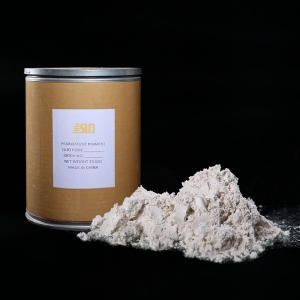
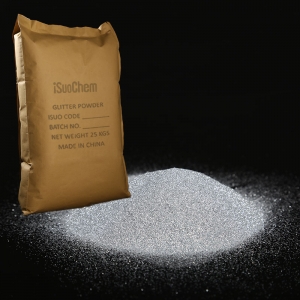
Anhui iSuoChem produit des poudres luminescentes d'aluminate de strontium et de sulfure de zinc dans son usine de 3 000 m². Ses poudres d'aluminate de strontium atteignent une durée de luminescence supérieure à 14 heures et sont certifiées REACH et ASTM F963.
Étapes de vérification avant
Approvisionnement
:
10.
Demander un rapport de test SGS montrant la courbe de décroissance de la luminescence (norme DIN 67510-1:2009).
11.
Vérifier la teneur en métaux lourds (Pb, Cd, Hg doivent être ND).
12.
Confirmer la distribution granulométrique (rapport Malvern Mastersizer).
13.
Tester un échantillon dans des conditions d'application réelles avant de passer une commande en gros.
FAQ
Q : La poudre phosphorescente d'aluminate de strontium justifie-t-elle son prix plus élevé ?
D'après une analyse du coût total de possession, l'aluminate de strontium devient plus économique que le sulfure de zinc après 8 à 10 ans, car son remplacement est gratuit. Pour les applications commerciales, le choix est évident : le sulfure de zinc nécessite un remplacement tous les 2 à 5 ans.
Q : Le sulfure de zinc peut-il être utilisé à l'extérieur ?
Le sulfure de zinc se dégrade en moins de 6 mois sous l'effet des UV extérieurs. L'aluminate de strontium est le seul matériau adapté aux applications extérieures d'une durée supérieure à un an.
Q : Quelle poudre phosphorescente est la plus brillante pour l'œil humain ?
L'aluminate de strontium vert (émission à 520 nm) apparaît deux fois plus lumineux que le sulfure de zinc bleu (450 nm) car l'œil humain est plus sensible à 555 nm (vision photopique). La différence de luminosité perçue est significative.
Q : Existe-t-il des problèmes de sécurité liés à l'aluminate de strontium ?
L'aluminate de strontium est non toxique et non radioactif. Des fournisseurs réputés comme iSuoChem fournissent des certificats REACH et ASTM F963 attestant de sa conformité. Les poudres bon marché non certifiées peuvent contenir des métaux lourds.
Q : Puis-je mélanger les poudres d'aluminate de strontium et de sulfure de zinc ?
Il est déconseillé de les mélanger. Le ZnS, dont la durée de vie est plus courte, se dégradera en premier, ce qui entraînera une luminescence irrégulière. Utilisez l'un ou l'autre pour obtenir des résultats homogènes.
Q : La température a-t-elle une incidence sur les performances de la poudre phosphorescente ?
L'aluminate de strontium fonctionne de -40 °C à 200 °C sans perte de performance. Le sulfure de zinc se dégrade au-delà de 60 °C. Pour les applications à haute température (par exemple, les pièces de moteur), seul l'aluminate de strontium convient.
Q : Comment distinguer visuellement l'aluminate de strontium du sulfure de zinc ?
Après charge, l'aluminate de strontium brille dix fois plus longtemps. Un test simple : chargez les deux pendant 10 minutes, puis observez après 2 heures. Si la luminescence est toujours visible, il s'agit d'aluminate de strontium. Sinon, il s'agit de sulfure de zinc.
Q : Quelle poudre illuminatrice est la meilleure pour les cosmétiques et le vernis à ongles ?
L'aluminate de strontium de qualité cosmétique (20 microns, surface traitée hydrophobe) est recommandé. Sa tenue est 20 fois supérieure sur les ongles en gel sans recharge. Vérifiez la conformité aux normes cosmétiques de la FDA ou de l'UE avant utilisation.
Q : La poudre phosphorescente peut-elle être rechargée indéfiniment ?
L'aluminate de strontium peut être rechargé plus de 100 000 fois sur une période de 20 à 30 ans. Le sulfure de zinc se dégrade après 500 à 1 000 cycles. Pour les installations permanentes, l'aluminate de strontium est la seule option viable.
---
Références des méthodes d'essai : DIN 67510-1:2009 (durée de luminescence), ASTM F963-17 (sécurité des jouets), liste REACH SVHC (métaux lourds), test QUV (résistance aux UV selon ASTM G154).


 web@ispigment.com
 +86 13965049124
 français
  English
 русский
 italiano
 español
 português
 العربية
 한국의
한국의 ไทย
ไทย Tiếng Việt